
Postpartum Weight Loss: A Safe and Realistic Timeline for New Moms
Discover a safe postpartum weight loss timeline, including recovery, exercise, nutrition, and realistic expectations for losing weight after pregnancy.
In this note
Bringing a baby into the world is an incredible experience, but it also brings significant changes to your body. It's completely natural to wonder when you'll start feeling like yourself again or when it's safe to focus on losing the pregnancy weight.
The truth is that postpartum weight loss isn't a race. Every woman's recovery is different, and your body needs time to heal after childbirth. Instead of chasing quick results, focus on rebuilding your strength, supporting your health, and creating sustainable habits that fit your new lifestyle.
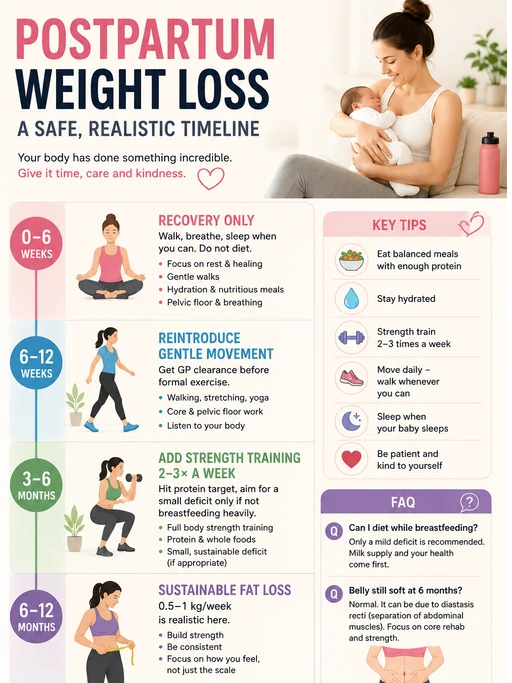
Here's a realistic timeline to help you understand what to expect during the first year after giving birth.
Weeks 0–6: Prioritize Recovery
The first six weeks after delivery are all about healing. Your body is recovering from pregnancy and childbirth, whether you had a vaginal delivery or a cesarean section. During this stage, your main priorities should be rest, hydration, proper nutrition, and caring for your baby.
Focus on:
Gentle walking if you feel comfortable
Deep breathing exercises
Pelvic floor exercises (if recommended by your healthcare provider)
Drinking plenty of water
Eating balanced, nutrient-rich meals
Sleeping whenever possible
This is not the time for restrictive diets or intense workouts. Your body needs energy to recover, and if you're breastfeeding, you'll also need extra calories to support milk production.
Weeks 6–12: Ease Back Into Movement
Once you've had your postpartum check-up and your healthcare provider has cleared you for exercise, you can begin introducing gentle physical activity.
Start slowly and listen to your body.
Good options include:
Walking
Light stretching
Yoga
Bodyweight exercises
Core rehabilitation exercises
Pelvic floor strengthening
There's no need to rush. Consistency is far more important than intensity during this stage.
Months 3–6: Build Strength Gradually
As your body becomes stronger, you can begin adding resistance training to your weekly routine. Aim for 2–3 strength training sessions per week, focusing on major muscle groups.
Include exercises such as:
Bodyweight squats
Glute bridges
Dumbbell rows
Romanian deadlifts
Wall or incline push-ups
Shoulder presses
Bird dogs
Dead bugs
Nutrition also becomes increasingly important during this phase. Prioritize protein, fruits, vegetables, whole grains, and healthy fats to support recovery and muscle growth. If you are not breastfeeding heavily, a small calorie deficit may be appropriate, but avoid extreme dieting.
Months 6–12: Focus on Sustainable Fat Loss
By this stage, many women feel stronger, have established routines, and can gradually increase the intensity of their workouts. A healthy and sustainable rate of fat loss is generally 0.5–1 kg per week, although every person's progress will be different.
Remember that postpartum recovery isn't only about the number on the scale. Building strength, improving energy levels, sleeping better, and feeling more confident are equally important milestones.
Healthy Tips for Postpartum Weight Loss
A few simple habits can make a big difference over time:
Eat balanced meals with plenty of protein.
Stay hydrated throughout the day.
Walk whenever possible.
Strength train 2–3 times per week.
Prioritize sleep whenever your schedule allows.
Avoid crash diets or detox programs.
Be patient with your body and celebrate small wins.
What to Expect Emotionally
The postpartum period can be physically and emotionally challenging. Hormonal changes, sleep deprivation, and adjusting to life with a newborn can all affect your mood and motivation.
Remember that your body has accomplished something extraordinary. Healing takes time, and comparing your progress to others can create unnecessary pressure. Your goal shouldn't be to bounce back but to move forward in a healthy, sustainable way.
Frequently Asked Questions
1. Can I lose weight while breastfeeding?
Yes, but it's important to avoid aggressive calorie restriction. A mild calorie deficit may be appropriate for some women, but maintaining your milk supply and overall health should always come first. If you're unsure, speak with your healthcare provider or a registered dietitian.
2. When can I start exercising after giving birth?
Most women can begin gentle movement soon after delivery, but structured exercise should only begin after receiving clearance from their healthcare provider, usually around six weeks postpartum. Recovery times may vary depending on your delivery and overall health.
3. Why does my belly still look pregnant after several months?
This is completely normal. Many women experience abdominal weakness or diastasis recti, a separation of the abdominal muscles that commonly occurs during pregnancy. Recovery varies from person to person, and specific core rehabilitation exercises may help improve strength and function.
4. How long does postpartum weight loss usually take?
There's no universal timeline. Some women lose weight within a few months, while others take a year or longer. Healthy, gradual progress is more sustainable than trying to lose weight quickly.